


What Technical Information Is Required for a Custom Pneumatic Cylinder?
- Home
- What Technical Information Is Required for a Custom Pneumatic Cylinder?
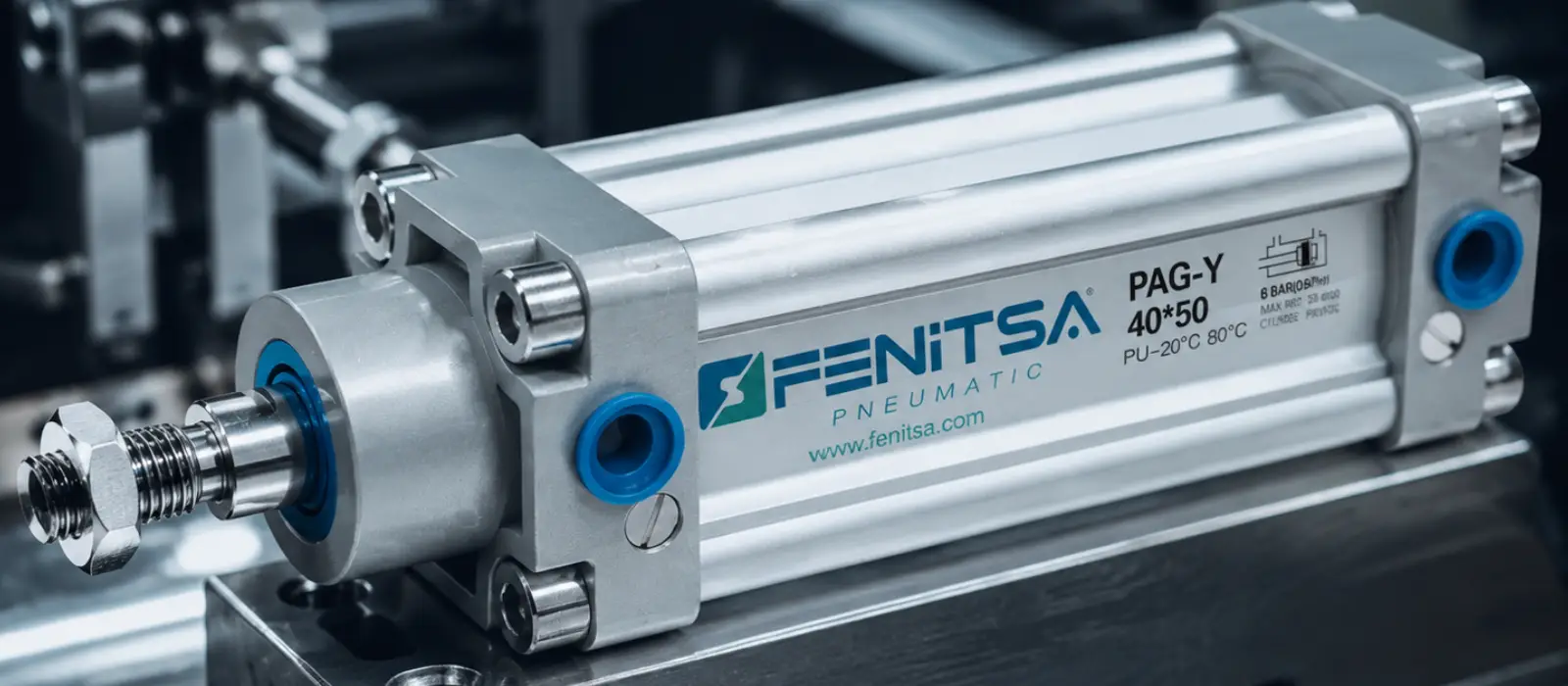
Standard pneumatic cylinders may be sufficient for many machinery and automation applications. However, when operating conditions involve limited installation space, a non-standard stroke length, a specific mounting configuration, a high cycle rate or a demanding working environment, an application-specific solution may be required. In such cases, a custom pneumatic cylinder is dimensioned and designed according to the mechanical structure and operating requirements of the machine.
Providing the manufacturer with approximate cylinder dimensions alone is not sufficient for an accurate design. The required movement, load, operating pressure, speed, mounting arrangement and environmental conditions must all be evaluated together. Incomplete or inaccurate information can result in insufficient force, unstable movement, premature seal wear and excessive stress on mounting points. Fenitsa helps determine the most suitable solution by systematically evaluating the required technical data at the beginning of each project.
How Are Cylinder Force, Bore Diameter, Stroke and Operating Speed Determined?
The first step is to clearly define the task the cylinder must perform. Operations such as pushing, pulling, clamping, lifting, guiding or holding a component in a specific position require different force and control characteristics. The weight of the load, direction of movement, mechanical friction and resistance encountered at the start of movement must be assessed together. In vertical applications, the effect of gravity must be considered, while in horizontal applications, resistance created by slides, guides and bearing elements should be included in the calculation.
The system’s normal operating pressure and maximum possible pressure should be specified separately. The theoretical force generated by a pneumatic cylinder depends on the operating pressure and effective piston area. However, under actual operating conditions, the full theoretical force may not be available because of friction, compressed-air losses and mechanical inefficiencies. For this reason, when sizing a custom pneumatic cylinder, both the nominal load and an appropriate safety margin must be considered.
The cylinder bore is one of the primary dimensions used to achieve the required force. A bore that is too small may produce insufficient force, while an unnecessarily large bore can increase compressed-air consumption, cylinder dimensions and overall cost. Piston rod diameter is also critical, particularly in long-stroke, high-speed applications or systems exposed to side loads. The rod diameter and material must be evaluated for resistance to buckling, bending and impact loads.
Stroke length is the effective travel distance between the initial and final positions of the piston rod. The manufacturer should be informed not only of the required travel but also of the maximum permitted retracted and extended cylinder lengths. Where installation space is limited, a compact body, adjustable stroke, double-rod configuration or another custom design may be considered. The range of pneumatic cylinders offered by Fenitsa can help determine whether a standard product is suitable or a custom design is necessary.
Movement time and cycle frequency also directly affect the cylinder design. It should be specified how many seconds the cylinder has to complete its stroke, how many cycles it will perform per minute or hour, and whether the system operates intermittently or continuously. High-speed applications may require adjustable cushioning to reduce impact at the end of the stroke. System components such as valve flow capacity, hose diameter and the air preparation unit can also influence the cylinder’s actual operating speed.
Which Mounting Dimensions, Connection Types and Custom Design Details Are Required?
The method used to connect the cylinder to the machine is important for transferring forces correctly through the cylinder body and piston rod. Foot, flange, clevis, intermediate trunnion, fork and spherical rod-end mountings may be suitable for different movement geometries. Rigid mountings can be used for fixed linear movements, while articulated solutions may be necessary in mechanisms where the operating angle changes during movement. Fenitsa’s pneumatic cylinder connection equipment includes different mounting and rod-end options suitable for a wide range of machine configurations.
The centre-to-centre distances between mounting points, pin diameters, thread dimensions, flange-hole positions and installation orientation should be shown on the technical drawing. When manufacturing a replacement for an existing cylinder, the retracted length, extended length, stroke, body diameter, piston rod diameter and mounting dimensions must be measured accurately. Since dimensioning a product from photographs alone can lead to errors, a fully dimensioned technical drawing or an existing sample should preferably be supplied.
Different cylinder configurations can be considered when a standard design cannot meet the application requirements. Double-rod, tandem, multi-position tandem, adjustable-stroke, heavy-duty, compact and specially constructed body designs can be used for specific machinery requirements. Different motion and body configurations can be reviewed on Fenitsa’s custom cylinders page. The selected custom pneumatic cylinder should be engineered to generate the required movement without requiring unnecessary modifications to the existing machine geometry.
Sensor requirements should also be specified at the beginning of the project. If the automation system must detect the piston at its initial, intermediate or final positions, a magnetic piston and suitable sensor grooves may be required. The orientation of the air ports, connection thread sizes, position of flow-control components and maintenance access area should also be indicated on the technical drawing. Defining these details in advance can reduce the need for additional adapters or pneumatic line modifications during installation.
Which Operating Environment, Material and Quotation Details Should Be Provided?
The working environment affects many cylinder components, from the body material to the sealing system. The manufacturer should be informed about ambient temperature, humidity, dust, water, chemicals and the possibility of contact with abrasive particles. Food processing, packaging, heavy-industry and outdoor applications may require special surface treatments, stainless-steel components, protective bellows or application-specific sealing solutions. A request for a custom pneumatic cylinder should therefore include environmental conditions as well as operating pressure.
The quality of the compressed air used in the system also affects cylinder service life. Information should be provided regarding air filtration, lubricated or non-lubricated operation, possible moisture formation and the risk of contamination inside the pneumatic lines. In high-cycle applications, seals, bearings and guiding elements are exposed to greater mechanical stress. Fenitsa evaluates the operating frequency and environmental conditions together to determine suitable materials and sealing components for the application.
When preparing a quotation request, the machine’s function, load to be moved, operating pressure, bore diameter, piston rod diameter, stroke, retracted and extended lengths, required speed, cycle rate and mounting configuration should be specified. Mounting drawings, photographs of the existing product, physical samples, sensor requirements, air-port dimensions and operating temperature should also be included where available. Providing complete technical data makes it easier to determine an accurate cost and realistic production schedule for the custom pneumatic cylinder.
For a newly designed machine, a three-dimensional model or fully dimensioned drawing of the mechanism to which the cylinder will be connected can be supplied. When replacing an existing product, the cause of failure, operating period and observed performance problems should also be explained. This approach allows the new design to improve weaknesses in the existing application rather than simply reproducing the previous cylinder. Fenitsa evaluates non-standard dimensions and operating requirements together with the project data to develop a technically feasible solution.
In conclusion, the correct custom pneumatic cylinder is determined by evaluating not only its dimensions, force and stroke but also the mounting geometry, operating speed, cycle frequency and environmental conditions. Providing complete information at the beginning of the project reduces the risk of design changes, installation problems and incompatibility. An evaluation carried out with Fenitsa using technical drawings, samples or application data contributes to the development of a reliable and sustainable pneumatic motion solution suited to the machine’s actual operating conditions.

