

 Türkçe
 Русский
 Español
 العربية
Hydraulic Cylinder Seals: Types, Materials and Leak Tests
A hydraulic cylinder relies on a set of seals: the piston seal separates the two chambers, the rod seal keeps oil in, and the wiper keeps dirt out. When one of them fails the cylinder leaks, drifts or loses force.
This guide covers seal types, materials, failure symptoms and the bench test that shows whether the piston seal is leaking internally.
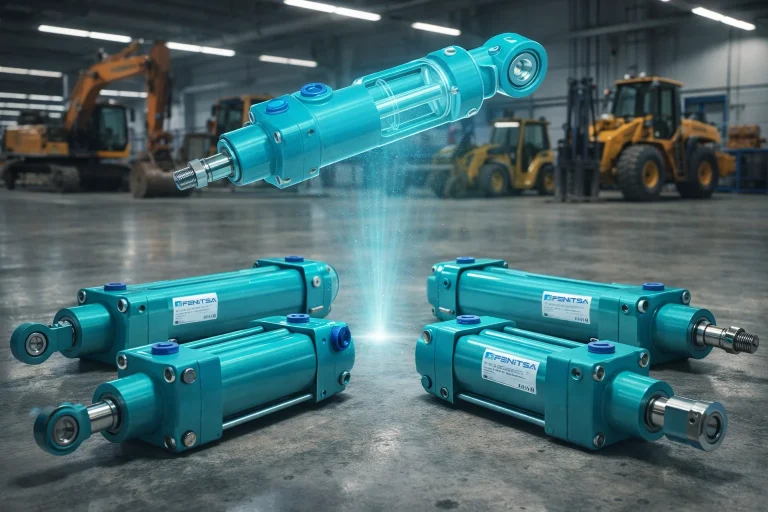
Seal Types
- Piston seal — seals the two chambers.
- Rod seal — prevents external leakage along the rod.
- Wiper (scraper) — removes dirt from the retracting rod.
- O-rings and back-up rings — static seals in heads and ports.
- Guide bands — carry side loads and stop metal-to-metal contact.
- Buffer seal — protects the rod seal from pressure peaks.
Materials and Limits
| Material | Use |
|---|---|
| NBR (standard) | Mineral oil, −20 °C to +80 °C |
| Viton / FKM | Higher temperatures; special seals up to +200 °C |
| PU (pneumatic) | Air cylinders, −20 °C to +80 °C |
Signs of Seal Failure
- Oil on the rod or around the head (rod seal or wiper).
- The load drifts down with the valve closed (piston seal).
- Slow or jerky movement and loss of force.
- Scored rod or damaged chrome.
Internal Leakage Test
- Secure the load and make the circuit safe.
- Extend the rod fully to the end stop.
- Disconnect the rod-side hose and leave the port open.
- Pressurise the piston side to working pressure.
- Steady oil flow from the open port means the piston seal is leaking.
Frequently Asked Questions
Why does a hydraulic cylinder leak?
Worn or damaged seals, a scored rod, a rough tube bore, contaminated oil or excessive temperature.
How can I tell if a piston seal is leaking?
Run the internal leakage test: with the rod fully extended and the rod-side port open, pressurise the piston side. Oil flowing from the open port means the piston seal leaks.
NBR or Viton?
NBR is the standard for mineral oil up to +80 °C. Viton is chosen for higher temperatures.
When should seals be replaced?
At the first sign of external leakage or load drift, and whenever the cylinder is opened for repair.
Send Us Your Cylinder Data
Bore, rod, stroke, working pressure, mountings and quantity — or a drawing or photo of the cylinder you want to replace. Our engineers reply with a technical proposal and a quotation.
Related Pages
Hydraulic Cylinders
All series
How cylinders are made
Production and testing
FDH series
NBR or Viton seal options
Request a quote
Repair or replacement cylinders