

How to Select a Telescopic Hydraulic Cylinder for a Tipper?
- Home
- How to Select a Telescopic Hydraulic Cylinder for a Tipper?
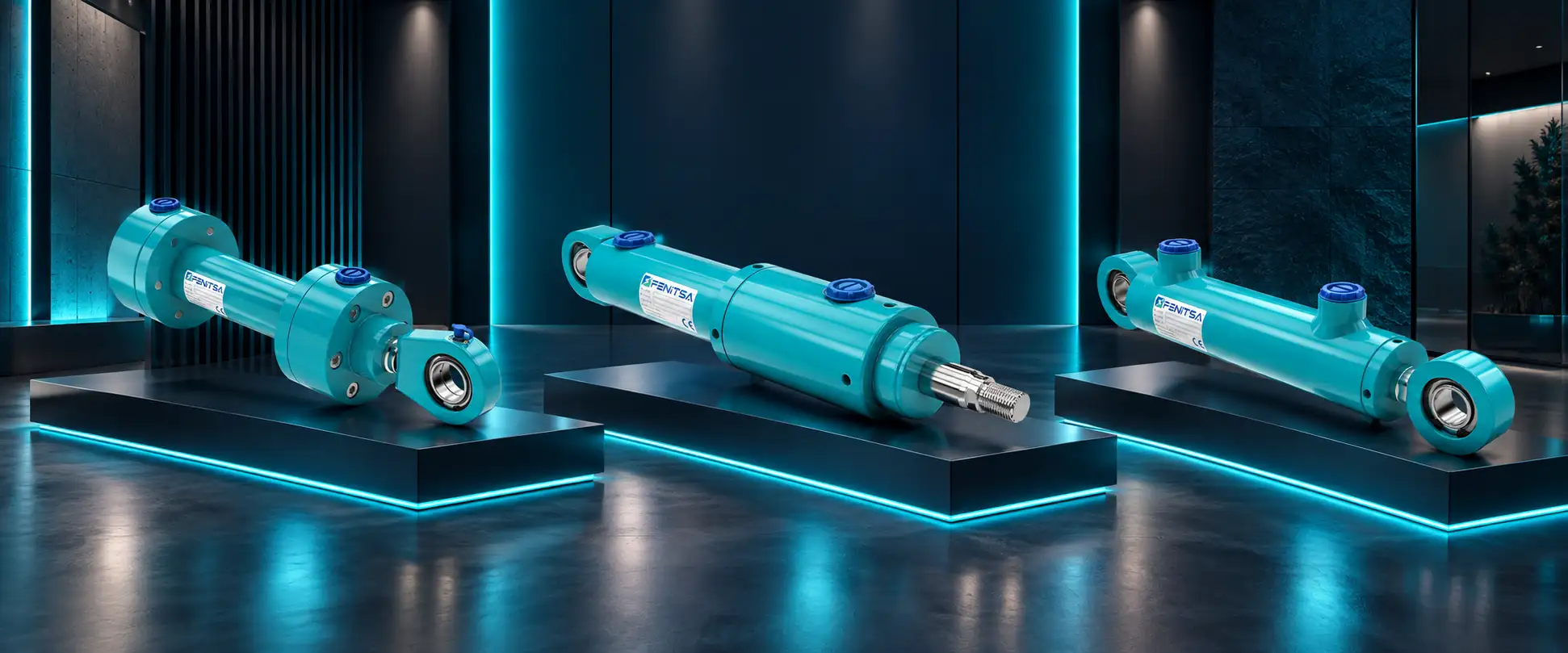
Selecting the correct hydraulic equipment for tipper trucks, trailers, semi-trailers, and various load-unloading systems is critically important for both operating performance and operational safety. One of the most important components in these systems is the telescopic hydraulic cylinder. Thanks to multiple nested stages working sequentially, a very long stroke can be achieved within a limited installation space.
However, selecting a telescopic hydraulic cylinder for a tipper should not be based solely on the cylinder length or its theoretical lifting capacity. The load to be carried, tipper geometry, lifting angle, operating pressure, stroke length, number of stages, and mounting points must all be evaluated together.
This guide explains how to select the correct telescopic hydraulic cylinder for tipper applications and which technical criteria should be considered during the project design stage.
Why Are Telescopic Hydraulic Cylinders Used in Tipper Systems?
In conventional hydraulic cylinders, the retracted length increases significantly as the stroke becomes longer. In tipper systems, however, the available installation space on the chassis is limited, while the body may need to reach a relatively high angle during unloading.
This is where the main advantage of telescopic cylinders becomes apparent.
Thanks to a structure consisting of two or more nested stages, the cylinder remains compact when fully retracted while providing a much longer working distance when extended.
This characteristic makes telescopic cylinders a widely used hydraulic solution, especially in:
Tipper trucks
Semi-trailers and trailers
Construction and earthmoving vehicles
Agricultural trailers
Waste transport equipment
Mining and heavy-duty vehicles
The Load Carried by the Tipper Must Be Calculated Correctly
One of the first criteria to evaluate when selecting a cylinder is the total weight of the tipper body and the material being transported.
Knowing only the maximum payload capacity is not sufficient. The weight of the body itself, the distribution of the load inside the body, and the location of the center of gravity also directly affect the required lifting force.
For example, two different tippers each carrying a 20-ton load may not necessarily use the same telescopic cylinder. Differences in body length, hinge position, and the cylinder mounting point on the chassis can significantly affect the required force.
The theoretical force of a hydraulic cylinder is primarily determined by the following relationship:
Force = Pressure × Effective Piston Area
However, in an actual system design, friction losses, mechanical angles, hydraulic system efficiency, and safety factors must also be taken into account.
For this reason, the cylinder should not be selected solely according to its theoretical lifting capacity.
How Does Tipper Geometry Affect Cylinder Selection?
One of the most critical factors when selecting a telescopic hydraulic cylinder for a tipper is the geometry of the system.
The cylinder mounting point on the body and the mounting point on the chassis directly affect how the required force changes during lifting.
The moment when the tipper body initially begins to rise is generally the point at which the system requires the highest force. As the body rises, the mechanical advantage changes and the required cylinder force may decrease.
For this reason, the following dimensions are particularly important during project calculations:
Total body length
Body weight
Maximum payload
Rear hinge position
Lower cylinder mounting point
Upper cylinder mounting point
Required maximum tipping angle
Using these values, the required force and stroke of the telescopic cylinder can be determined more accurately.
How Is the Stroke Length of a Telescopic Cylinder Determined?
Stroke refers to the total distance travelled by the cylinder as it moves from the fully retracted position to the fully extended position.
In a tipper application, the required stroke length is directly related to the unloading angle that the body is expected to reach.
If the selected stroke is too short, the body may not reach a sufficient tipping angle and the material may not be completely discharged. On the other hand, selecting a stroke that is unnecessarily long can negatively affect the system geometry and may cause the cylinder to operate outside its intended mechanical limits.
When calculating the correct stroke, the following factors should be evaluated together:
Retracted cylinder length
Maximum extended cylinder length
Mounting points
Tipper body angle
In custom tipper projects, a cylinder specifically designed for the application may be required instead of standard dimensions. For more detailed information about manufacturing and technical options for these types of projects, you can visit Fenitsa’s Telescopic Hydraulic Cylinders page.
How Many Stages Should a Telescopic Cylinder Have?
Telescopic hydraulic cylinders can be designed with two, three, four, or more stages.
Increasing the number of stages allows a longer stroke to be achieved relative to the retracted length of the cylinder. However, using more stages is not always the correct solution for every application.
When determining the number of stages, the following should be considered:
Available installation space
Required total stroke
Maximum operating pressure
Load capacity
Stability of the cylinder when fully extended
For example, if there is very limited installation space on the chassis but a high tipping angle is required, a telescopic cylinder with more stages may be necessary.
In systems where sufficient installation space is available, the required stroke may be achieved with fewer stages.
Why Is Operating Pressure Important?
The operating pressure of the hydraulic system directly affects the amount of force the cylinder can generate.
In tipper systems, the pump, valves, hoses, connection components, and cylinder must all be suitable for the same pressure range. Designing the system solely according to pump capacity is not the correct approach.
Continuous operation of the cylinder above its nominal working pressure may cause:
Seal deformation
Hydraulic oil leakage
Wear of guiding components
Damage to the cylinder body
For this reason, when selecting a telescopic hydraulic cylinder for a tipper, it is important to inform the manufacturer of both the maximum and normal operating pressures of the vehicle’s hydraulic system.
Difference in Force Between Cylinder Diameters and Stages
Each stage of a telescopic cylinder has a different diameter. During extension, the stage with the largest diameter generally moves first, followed by progressively smaller stages.
As the piston area decreases, the force that can be generated at the same hydraulic pressure also decreases.
For this reason, especially in tipper systems operating under load, it is not sufficient to evaluate only the lifting capacity of the first stage.
The force generated at every stage of the cylinder should be analyzed together with the system geometry.
Mounting and Connection Points Must Be Checked
Correct installation is just as important as selecting the correct telescopic cylinder.
A cylinder that is incorrectly positioned may be exposed to off-axis forces. This can lead to bending of the cylinder stages, wear of guide components, and reduced seal life.
During installation, particular attention should be paid to:
Alignment of the upper and lower mounting axes
Articulation and joint movement
Clearance in the retracted position
Mechanical limits in the fully extended position
Hydraulic hose routing
The cylinder should operate as closely as possible to its intended axis throughout the complete tipping movement.
What Determines the Price of a Telescopic Hydraulic Cylinder?
The price of a telescopic hydraulic cylinder used in tipper applications is not determined according to a single standard.
The main factors affecting price include:
Cylinder diameter
Number of stages
Total stroke
Operating pressure
Mounting type
Quality of the steel and tubing used
Rod and surface treatment specifications
Sealing elements
Production quantity
Custom dimensions or special design requirements
Especially for cylinders intended for heavy-duty operating conditions, the decision should not be based solely on the initial purchase price. Long service life, sealing performance, and maintenance requirements directly affect the total operating cost.
For more information about general pricing criteria and other factors affecting hydraulic cylinder costs, please visit Fenitsa’s Custom Hydraulic Cylinder Prices page.
What Information Should Be Provided to the Manufacturer When Selecting a Cylinder?
To determine the correct telescopic cylinder, as much detailed technical information as possible should be provided to the manufacturer.
Preparing the following data during the quotation or project stage will help accelerate the process:
Tipper type
Empty and maximum loaded weight of the body
Body length
Required maximum tipping angle
Available space for the cylinder in the retracted position
Required stroke length
Hydraulic system operating pressure
Dimensions of mounting points
Frequency of use
Operating environment
Based on this information, the cylinder diameters, number of stages, and stroke can be determined according to the specific requirements of the application.
Why Is the Correct Telescopic Hydraulic Cylinder Important for a Tipper?
In a tipper system, the telescopic cylinder is not simply a component that raises the body. It has a direct influence on the system’s load-carrying capacity, unloading performance, and operating safety.
Selecting the wrong cylinder may result in insufficient lifting force, prevent the body from reaching the required tipping angle, or place excessive stress on hydraulic components.
For this reason, when selecting a telescopic hydraulic cylinder for a tipper, it is necessary to consider not only basic dimensions such as cylinder diameter and stroke, but also the load, geometry, operating pressure, stage configuration, and overall working conditions.
Fenitsa offers hydraulic cylinder manufacturing options designed according to project requirements for a variety of industrial and mobile applications. Correctly defining the technical parameters of the application is one of the fundamental steps in creating a more efficient and longer-lasting hydraulic system.
Selecting the correct telescopic hydraulic cylinder for a tipper requires the maximum load, body geometry, required stroke, number of stages, and hydraulic operating pressure to be evaluated together.
Especially in custom-sized or heavy-duty applications, calculating the cylinder according to actual operating conditions rather than directly using a standard cylinder provides more appropriate results.
In telescopic hydraulic cylinder solutions developed by Fenitsa, the objective is to determine the appropriate cylinder configuration by considering the operating conditions and technical requirements of the application. A correctly engineered system not only improves lifting performance but also contributes to safer and longer-lasting operation of hydraulic equipment.

