

 Türkçe
 Русский
 Español
 العربية
Hydraulic & Pneumatic Calculators
Free online engineering calculators for hydraulic and pneumatic systems: cylinder force, press tonnage, pipe size, flow rate, motor power and air cylinder force. Every tool uses standard formulas and returns results in the units engineers actually use, from kN and metric tons to lbf and GPM.
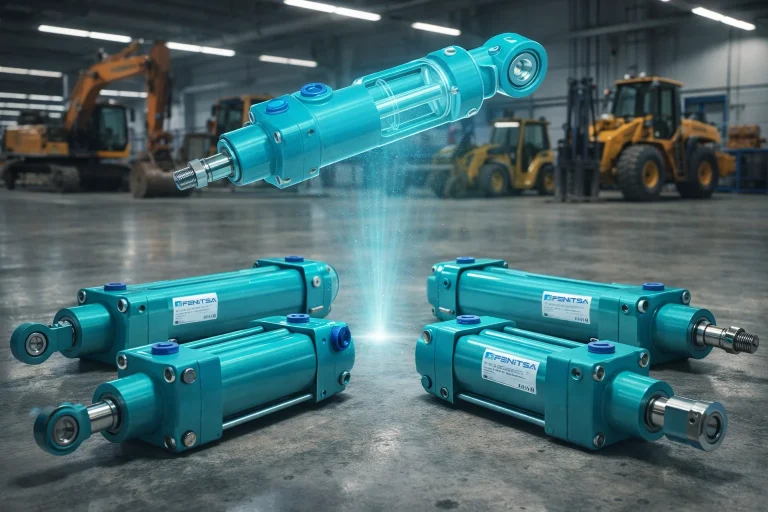
Fenitsa has manufactured hydraulic and pneumatic cylinders since 1976. These are the same calculations our engineers use when quoting a cylinder.
Calculators
Pick the tool for your task.
Hydraulic Cylinder Force Calculator
Push and pull force from pressure, bore and rod size.
Hydraulic Force & Tonnage Calculator
Converts pressure and area into force in kN and tons.
Hydraulic Pipe Size Calculator
Inner pipe diameter from flow rate and recommended velocity.
Hydraulic Flow Rate Calculator
Pump flow required for a given cylinder speed.
Hydraulic Motor Power Calculator
Hydraulic power, torque and speed.
Pneumatic Cylinder Force Calculator
Air cylinder force in N, kgf and lbf at bar or psi.
Which Calculator Do I Need?
| Calculator | What it calculates | Use it for |
|---|---|---|
| Hydraulic Cylinder Force Calculator | Push and pull force from pressure, bore and rod size. | Sizing a cylinder |
| Hydraulic Force & Tonnage Calculator | Converts pressure and area into force in kN and tons. | Press tonnage |
| Hydraulic Pipe Size Calculator | Inner pipe diameter from flow rate and recommended velocity. | Line sizing |
| Hydraulic Flow Rate Calculator | Pump flow required for a given cylinder speed. | Pump selection |
| Hydraulic Motor Power Calculator | Hydraulic power, torque and speed. | Drive power |
| Pneumatic Cylinder Force Calculator | Air cylinder force in N, kgf and lbf at bar or psi. | Pneumatic sizing |
Sizing a Hydraulic System in Four Steps
- 1
Force and bore
From the load and working pressure, find the required bore (F = P × A).
- 2
Speed and flow
From the target speed, calculate the flow (Q = A × v).
- 3
Pipe size
Choose suction, pressure and return line diameters from flow and recommended velocity.
- 4
Power
Calculate pump and motor power (kW = bar × L/min / 600).
Need a Cylinder for Your Numbers?
Send us your force, stroke and pressure; we will match a standard FDH, KHS or THS series cylinder or build one to your drawing.
Calculator FAQ
Short technical answers.
Which formula do the force calculators use?
Force equals pressure times piston area: F = P × A; for push and pull values of a specific bore and rod, use the hydraulic cylinder force calculator. With pressure in bar, multiply by 0.1 to get N/mm². At 160 bar (2,320 psi) an 80 mm (3.15 in) bore produces about 80,400 N, roughly 8.2 metric tons of push force.
In what order should I use the calculators?
Start with the force calculator to choose the bore, then use the flow rate calculator for the required speed, the pipe size calculator for the lines and finally the power calculator for the drive.
Are the results exact?
They are theoretical values. Seal friction and pressure losses typically reduce real force by 5–10% in hydraulics and 10–15% in pneumatics. Apply a safety factor and check rod buckling for long strokes.
Are the calculators free?
Yes. All Fenitsa calculators are free, need no registration and work on mobile devices.