

 Türkçe
 Русский
 Español
 العربية
100 mm Bore Hydraulic Cylinder: Force, Rod and Speed
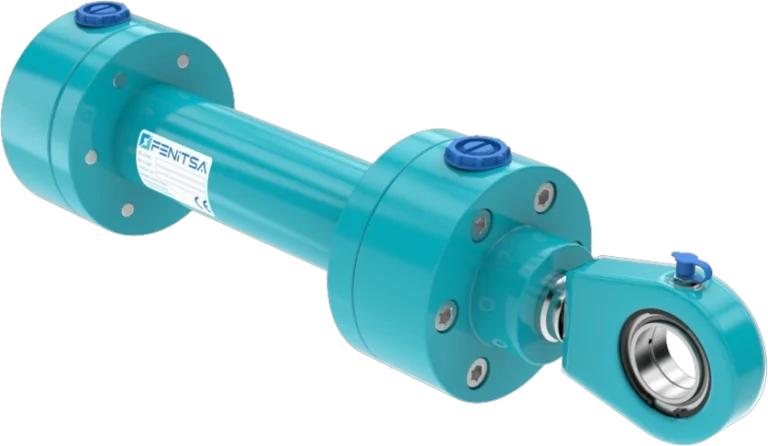
A 100 mm bore hydraulic cylinder (3.94 in, the metric equivalent of a 4-inch bore) pushes 12.8 t at 160 bar and 20.0 t at 250 bar. Fenitsa's FDH Ø100 takes a Ø56 or Ø70 rod with an M42×2 rod-end thread.
It is the most common size for 10-tonne lifting and pressing jobs.
Force by Pressure and Rod
| Pressure | Push (t) | Pull, Ø56 rod (t) | Pull, Ø70 rod (t) |
|---|---|---|---|
| 100 bar | 8.0 | 5.5 | 4.1 |
| 160 bar | 12.8 | 8.8 | 6.5 |
| 250 bar | 20.0 | 13.7 | 10.2 |
Speed by Pump Flow
| Pump (L/min) | Extend (mm/s) | Retract, Ø56 (mm/s) |
|---|---|---|
| 10 | 21 | 31 |
| 20 | 42 | 62 |
| 40 | 85 | 124 |
| 60 | 127 | 185 |
Rod Buckling by Stroke
Allowable push load in tonnes; Euler, steel rod, safety factor 3.5, pivoted at both ends (Lk ≈ 2 × stroke).
| Rod | 500 mm | 1000 mm | 1500 mm | 2000 mm |
|---|---|---|---|---|
| Ø56 | 29.2 | 7.3 | 3.2 | 1.8 |
| Ø70 | 71.2 | 17.8 | 7.9 | 4.4 |
At 160 bar the cylinder pushes 12.8 t: where a value is lower, choose the Ø70 rod or a mounting that shortens the buckling length.
Frequently Asked Questions
How many tons is a 100 mm hydraulic cylinder?
12.8 t at 160 bar, 20.0 t at 250 bar.
Which rod for a Ø100 cylinder?
Ø56 mm as standard, Ø70 mm for long strokes or higher pull speed.
How fast does a Ø100 cylinder extend?
With 20 L/min about 42 mm/s.
Send Us Your Cylinder Data
Bore, rod, stroke, working pressure, mountings and quantity — or a drawing or photo of the cylinder you want to replace. Our engineers reply with a technical proposal and a quotation.