

 Türkçe
 Русский
 Español
 العربية
Welded Hydraulic Cylinders
A welded hydraulic cylinder has its end cap welded to the barrel and its gland threaded or bolted into the open end, so it needs no external tie rods. The body is compact, lighter than a tie-rod cylinder of the same size and free of exposed rods — the usual choice for mobile, agricultural and construction machinery.
Fenitsa’s THS series is a welded-body cylinder for compact machines, from Ø40 to Ø200 mm bore with strokes up to 3,000 mm. Welded cylinders outside the series are built to customer drawings as part of our hydraulic cylinders range, made in our own plant.
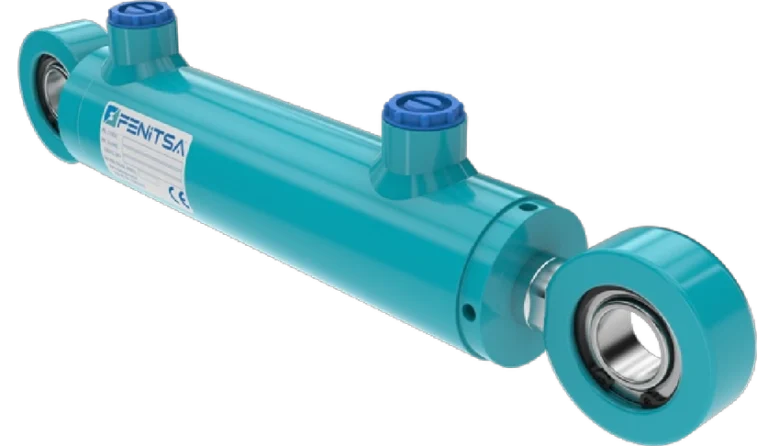
What Is a Welded Hydraulic Cylinder?
In a welded cylinder the barrel is one pressure vessel. At the base, a cap is welded to the tube, usually together with the rear mounting and the port bosses. At the rod end, a gland (head) carrying the rod bearing, rod seal and wiper is screwed into the tube or held by bolts or a locking ring. When oil pressure pushes the base and the gland apart, the weld and the gland retention carry that force instead of tie rods.
Welded body cylinder and welded rod cylinder are other names for the same design. Without tie rods, mountings can be welded wherever the machine needs them — on the cap, on the barrel or as a trunnion.
- Rear cap (cap end)
- Rear clevis mounting
- Port A — cap end (full bore side)
- Barrel (honed cylinder tube)
- Welded cap (no tie rods)
- Piston
- Piston seal
- Wear (guide) rings
- Piston rod (hard chrome plated)
- Front head (gland)
- Rod bearing (guide bush)
- Rod seal
- Wiper (scraper)
- Port B — rod end (annulus side)
- Cushioning spear and adjusting screw
- Static O-rings
- Rod eye
Cap-side chamber — pressure acts on the full piston area · Rod-side chamber — pressure acts on the annulus area
Construction: Welded Cap, Threaded or Bolted Gland
Two joints define a welded cylinder: the cap weld and the gland retention.
| Gland type | How it is held | Service notes |
|---|---|---|
| Threaded gland | Screwed into a thread inside the tube | Compact; removed with a spanner wrench; check the thread at every rebuild |
| Bolted gland | Flange on the gland bolted to a ring welded to the tube | Removed with standard tools; slightly larger outside diameter |
| Locking-ring gland | Ring locked into matching grooves in the tube and gland | Smallest envelope; needs the right technique to dismantle |
The cap weld carries the full cap-end force on every stroke — 125.7 kN, about 12.8 tonnes, on a Ø100 mm cylinder at 160 bar — so joint preparation, penetration and inspection decide the fatigue life. Welding heat must stay away from the honed bore and seal grooves, so a good design places the welds to keep the bore round and fits the seals after welding.
The gland carries the rod bearing, so its length and fit decide how well the cylinder copes with side loads from machine deflection.
Welded Cross Tube and Clevis Ends
The two end types found on most welded cylinders.
A cross tube is a short tube welded across the cap or a block on the rod and bored for a pin; it can take a bushing or a spherical bearing. A clevis is a fork with two lugs that puts the pin in double shear: it suits high loads but needs room for the fork.
| End type | What it is | Where it fits |
|---|---|---|
| Cross tube, plain or bushed | Tube welded across the cap or rod end, bored for a pin | Pivoting loads with little misalignment |
| Cross tube with spherical bearing | The same tube with a spherical bearing pressed in | Pin axes that are not perfectly parallel |
| Clevis | Fork with two lugs and a pin | High loads; mates with an eye or tang |
| Tang or pin eye | Single plate or eye welded to the cap | Mates with a clevis bracket on the machine |
| Welded trunnion | Two pins welded to the barrel | Cylinders that pivot part-way along their length; shortens the buckling length |
| Threaded rod end | Male or female thread on the rod | Rod eye, clevis or the customer’s own part |
For a replacement, measure the pin diameter, the cross tube width or clevis gap and the pin-to-pin length when retracted. Our guide on how to measure a hydraulic cylinder shows each dimension.
Welded Cylinder Specifications
THS is the welded-body range; the FDH catalogue sets the published reference values.
| Series | Build | Bore | Rod | Maximum stroke |
|---|---|---|---|---|
| THS | Welded body, compact machines | Ø40–Ø200 mm | Ø22–Ø110 mm | 3,000 mm |
| KHS | Heavy duty, mobile equipment | Ø40–Ø200 mm | Ø22–Ø110 mm | 3,000 mm |
| FDH | Catalogue series, CETOP RP 58 H mountings | Ø40–Ø200 mm | Ø25–Ø125 mm | 5,000 mm |
| Custom welded | To the customer’s drawing | Larger bores built to order | To drawing | To drawing |
- Working pressure160 bar
- Test pressure240 bar
- Optional pressure250 bar
- Max piston speed0.5 m/s
- TubeHoned St52BK+S
- RodCk45, chrome ≥ 20 µm
- SealsNBR or Viton
- Oil temperature−20 to +80 °C
For THS, KHS and custom welded cylinders, the working pressure, materials and test pressure are stated in the quotation for your design. Every Fenitsa cylinder is tested for internal and external leakage before dispatch.
Welded vs Tie Rod: 5 Key Differences
- Size and weightA welded cylinder is barely wider than its tube; square heads and tie rods make a tie-rod cylinder bulkier and heavier.
- ServiceA tie-rod cylinder comes apart on the bench by loosening the nuts. A welded cylinder is serviced through the gland; the cap stays welded.
- MountingsWelded ends go where the machine needs them; tie-rod cylinders use catalogue mountings bolted to the heads.
- Standard dimensionsTie-rod cylinders follow standardised mounting dimensions — Fenitsa uses CETOP RP 58 H — so replacements fit directly. Welded cylinders are usually specific to one machine.
- Typical useWelded: excavators, loaders, cranes, tippers, tractors and implements. Tie rod: presses, injection moulding machines, machine tools and automation lines.
Pressure rating, cost logic, shock resistance and five more points are compared in the 10-row table on our tie rod hydraulic cylinders page.
Industries: Mobile Hydraulics, Agriculture and Construction
Construction machinery
Boom, blade and outrigger cylinders that see shock loads and dirt. Construction cylinders.
Excavators and loaders
Pinned cylinders with a cross tube or clevis at both ends. Excavator cylinders.
Agricultural machinery
Front loaders, hitches, balers and implements. Agricultural cylinders.
Tippers and trailers
Tipping, tailgate and steering cylinders. Dump truck cylinders.
Mining equipment
Compact cylinders for dusty, high-impact work. Mining cylinders.
Custom Welded Cylinders
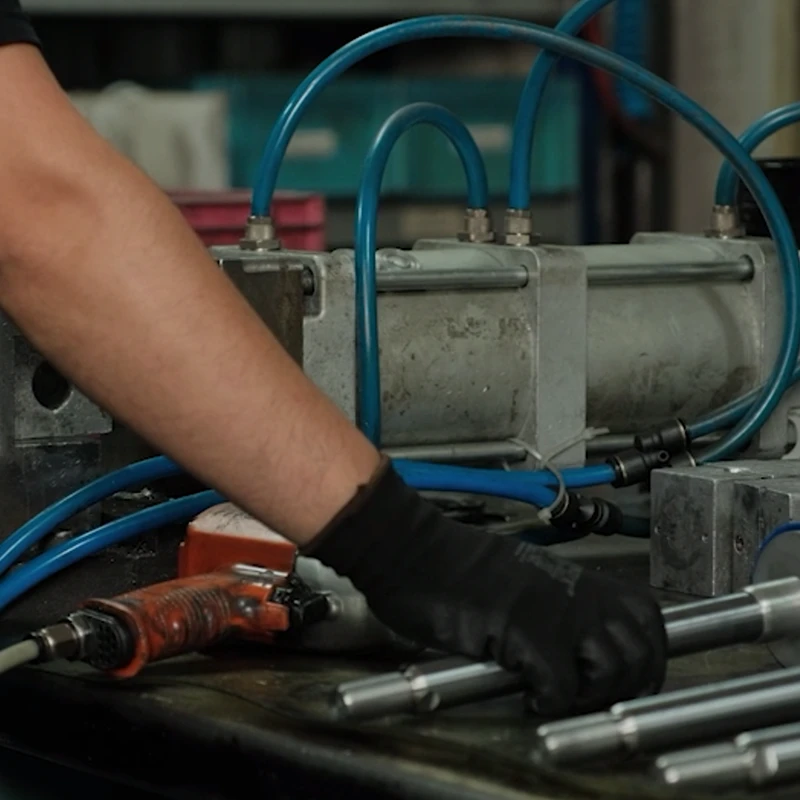
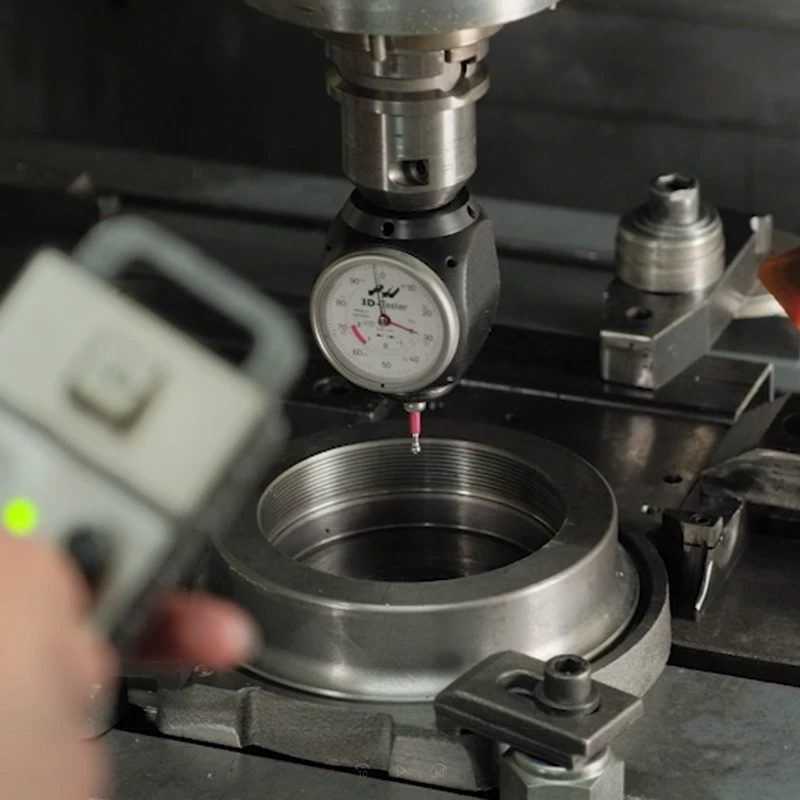
Most welded cylinders are designed around one machine, so we build them to drawing or to a sample. Casting, CNC machining, turning, robotic processing, painting, assembly and quality control are done in-house at our plant, and Fenitsa has made hydraulic cylinders since 1979. See custom hydraulic cylinders for the full process.
- Drawing, sample or photosWith the machine model and where the cylinder sits.
- Bore, rod and strokePlus the retracted pin-to-pin length.
- End typesCross tube, clevis, eye or trunnion, with pin diameters and widths.
- PortsThread type, size and position.
- Pressure and dutyWorking and peak pressure, speed, and whether the load is shock-type.
- QuantityPrototype, pilot batch or series.
Send Us Your Cylinder Data
Bore, rod, stroke, working pressure, mountings and quantity — or a drawing or photo of the cylinder you want to replace. Our engineers reply with a technical proposal and a quotation. info@fenitsa.com.
Welded Hydraulic Cylinders – FAQ
Short answers from our engineers.
Can you weld on a hydraulic cylinder?
Only on a stripped cylinder, and preferably before final machining. Welding on an assembled cylinder destroys the seals, can distort the honed bore and can arc through the rod and bearings. Never weld on a cylinder that still contains oil or pressure; brackets and lugs should be welded by the manufacturer.
What is a cross tube hydraulic cylinder?
A welded cylinder whose base, and usually the rod end, carries a short tube welded at right angles and bored for a pin, with or without a bushing or spherical bearing. It is simple, strong and easy to pin into a bracket, so it is common on loaders, tippers and implements.
Can welded hydraulic cylinders be repaired?
Yes. The gland is threaded, bolted or ring-locked, so the rod seal, wiper, rod bearing, piston seals, piston and rod can all be replaced; only the cap weld is permanent. Fenitsa provides service and spare-parts support for 10 years.
What sizes are Fenitsa welded cylinders available in?
The THS welded-body series covers Ø40 to Ø200 mm bore and Ø22 to Ø110 mm rod, with strokes up to 3,000 mm. Welded cylinders outside that range are built to the customer’s drawing, and larger bores are built to order.
Why do mobile machines use welded cylinders?
They are compact, lighter than tie-rod cylinders of the same bore and stroke, and have no external rods to catch or stretch. Their ends are welded exactly where the machine needs them.
Do you build welded cylinders to drawing or sample?
Yes. Send a drawing, a sample or photos with the main dimensions — bore, rod, stroke, retracted pin-to-pin length, end types and port positions. Fenitsa engineers reply with a technical proposal and a quotation.
Related Pages
Tie-Rod Hydraulic Cylinders
The 10-point tie rod vs welded comparison and a force table.
THS Type Hydraulic Cylinders
Welded-body series, Ø40–Ø200 mm, strokes to 3,000 mm.
KHS Type Hydraulic Cylinders
Heavy-duty cylinders for mobile equipment.
Types of Hydraulic Cylinders
Tie rod, welded, telescopic and plunger designs compared.