Fenitsa

Hydraulic Cylinders

Hydraulic Cylinders

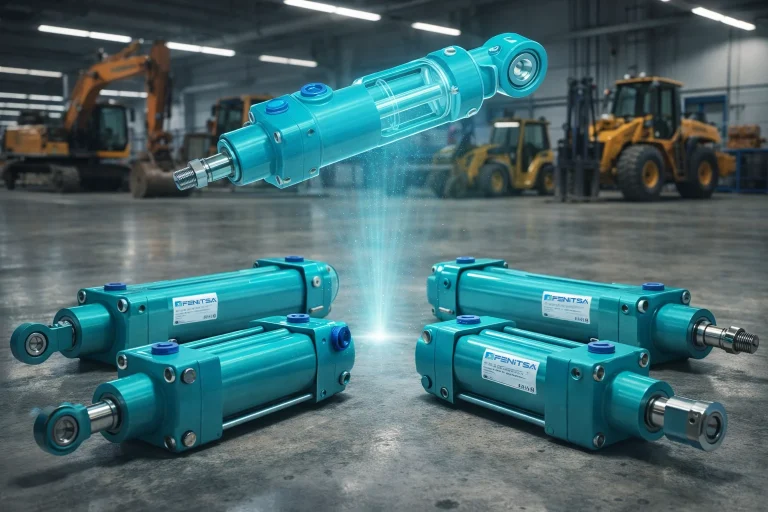
Fenitsa offers standard and custom-sized hydraulic cylinder solutions for industrial and mobile applications. Options including FDH, KHS, THS, telescopic, and tie-rod hydraulic cylinders can be evaluated according to the project requirements, considering various stroke lengths, piston diameters, mounting types, and operating conditions.

Hydraulic cylinders convert hydraulic energy into linear motion, performing pushing, pulling, lifting, clamping, and positioning tasks in machinery and equipment. Fenitsa hydraulic cylinders are available with a wide range of body types, mounting configurations, and stroke options, suitable for use in machine manufacturing, mobile equipment, press systems, lifting equipment, and specialized engineering applications.

Hydraulic Cylinders

FDH Type Hydraulic Cylinder

ISO-based joint assembly, industrial applications

FDH-TIPI-HIDROLIK-SILINDIRLER
50
- 200 mm
Piston Diameter
28
- 140 mm
Piston Rod Diameter
0
- 300 mm
Stroke Length
View Product

KHS Type Hydraulic Cylinder

Reinforced design for mobile equipment

KHS-TIP-HIDROLIK-SILINDIRLER
40
- 200 mm
Piston Diameter
22
- 110 mm
Piston Rod Diameter
0
- 3000 mm
Stroke Length
View Product

THS Type Hydraulic Cylinder

Welded body, ISO 3320 compliant

THS-TIP-HIDROLIK-SILINDIRLER
40
- 199 mm
Piston Diameter
22
- 110 mm
Piston Rod Diameter
0
- 3000 mm
Stroke Length
View Product

Telescopic Hydraulic Cylinder

Short-stroke cylinder for confined spaces

TELESKOPİK-HiDROLİK-SİLİNDİR
65
- 180 mm
Piston Diameter
20
- 166 mm
Piston Rod Diameter
0
- 502 mm
Stroke Length
View Product

Rotary Hydraulic Cylinder

Enhanced sealing for demanding mobile usage

ROTLU-HIDROLIK-SILINDIRLER
40
- 200 mm
Piston Diameter
28
- 125 mm
Piston Rod Diameter
0
- 5000 mm
Stroke Length
View Product

Cylinder Front Rear Cover

ISO-based joint assembly, industrial applications

SILINDIR-ON-ARKA-KAPAK
0
- 0 mm
Piston Diameter
0
- 0 mm
Piston Rod Diameter
0
- 0 mm
Stroke Length
View Product

Assembly Equipment

CETOP-R58 Standard

MONTAJ-EKIPMANLARI
0
- 0 mm
Piston Diameter
0
- 0 mm
Piston Rod Diameter
0
- 0 mm
Stroke Length
View Product

Hydraulic Blocks

Service & Spare Parts Support

Hidrolik-Bloklar
0
- 0 mm
Piston Diameter
0
- 0 mm
Piston Rod Diameter
0
- 0 mm
Stroke Length
View Product

What Information is Required for Hydraulic Cylinder Selection?

Simply knowing the bore or stroke is not enough for selecting the correct hydraulic cylinder. Factors such as operating pressure, load capacity, mounting style, travel distance, ambient temperature, required speed, and connection type must be evaluated together. Sharing the following information when submitting a quote request to Fenitsa will help determine the most suitable hydraulic cylinder solution for your project:

  • Bore diameter

  • Rod diameter

  • Stroke length

  • Operating pressure

  • Mounting style

  • Application area

  • Ambient temperature

  • Single-acting / double-acting operation requirement

  • Technical drawing or sample information (if available)

Applications of Hydraulic Cylinders

Fenitsa hydraulic cylinders are utilized in systems requiring linear motion and high force across various sectors. The appropriate product group can be selected for machine manufacturing, agricultural machinery, mobile equipment, lifting systems, press applications, industrial lines, and custom automation projects.

Areas of Application:

  • Machine Manufacturing

  • Mobile Equipment

  • Agricultural Machinery

  • Press Systems

  • Lifting Systems

  • Specialized Engineering Applications

Manufacturing and Testing Process

In Fenitsa hydraulic cylinder solutions, the product’s suitability for operating conditions, dimensional tolerances, sealing structure, and mounting details are evaluated collectively. Selecting the appropriate product aims to ensure safe operation, long service life, and reduced maintenance requirements for the system. Project evaluations can be conducted based on technical drawings, catalogs, and product details according to specific requirements.

  • Internal and external leakage testing

  • Operating pressure and test pressure evaluation

  • Selection of piston rod, cylinder tube, and seal configuration based on the application

  • Service and spare parts support

  • Standard and custom size options

What is a hydraulic cylinder? A hydraulic cylinder is a mechanical element that converts hydraulic pressure into linear motion. It is used for tasks such as pushing, pulling, lifting, clamping, and positioning.

What should be considered when selecting a hydraulic cylinder? Bore diameter, rod diameter, stroke length, operating pressure, mounting style, ambient temperature, load conditions, and the application area must be evaluated collectively.

Does Fenitsa manufacture custom hydraulic cylinders? Beyond standard product groups, hydraulic cylinder solutions can be evaluated based on project-specific dimensions, mounting, and stroke requirements.

Where are telescopic hydraulic cylinders used? Telescopic hydraulic cylinders are preferred for tipper, lifting, and mobile equipment applications where a short retracted length but a long stroke is required.

How is the price determined for a hydraulic cylinder? The price is determined based on the diameter, stroke, mounting style, material selection, operating pressure, quantity, custom manufacturing requirements, and technical specifications.

Are hydraulic cylinders tested? Depending on the product group and application requirements, technical checks are performed regarding sealing, pressure, and operating conditions.

Hydraulic Cylinder Product Groups Comparison Table

Fenitsa hydraulic cylinder product groups offer various options for standard industrial applications, heavy-duty systems, welded body solutions, telescopic movement requirements, and complementary hydraulic system components. The comparison table below helps you determine the most suitable hydraulic cylinder type for your application.

Note: Technical values for FDH, KHS, THS, and Tie-Rod hydraulic cylinders are prepared based on Fenitsa product data. Dimensions and technical details for telescopic hydraulic cylinders, cylinder heads, mounting equipment, and hydraulic manifolds should be evaluated on a project-specific basis.

Technical and usage area comparison of Fenitsa hydraulic cylinder product groups
Product Group Purpose of Use Operating / Test Pressure Piston and Rod Diameter Stroke Information Mounting / Connection Options Material and Temperature Key Advantage Suitable For Details
FDH Type Hydraulic Cylinder Used for linear motion, pushing, pulling, lifting, and positioning in general industrial applications.
  • Operating pressure: 160 bar / 16 MPa
  • Test pressure: 240 bar / 24 MPa
  • Optional pressure: 250 bar / 25 MPa
  • Piston diameter: Ø40, Ø50, Ø63, Ø80, Ø100, Ø125, Ø160, Ø200 mm
  • Piston rod diameter: 28 - 125 mm
  • Standard strokes: 100, 200, 300, 400, 500 mm
  • Maximum stroke: 5,000 mm
  • Maximum speed: 0.5 m/s
Available with foot, clevis, flange, and trunnion mounting options.
  • Cylinder tube: Honed St52Bk+S steel tube
  • Piston rod: Ck45 steel, min. 20 μm hard chrome plated, f7 tolerance
  • Standard temperature: -20°C / +80°C
  • Optional temperature: -30°C / +200°C
Offers a wide range of applications thanks to standard dimensions and connection options. Machine manufacturers, production lines, lifting systems, and projects requiring standard hydraulic cylinders. View
KHS Type Hydraulic Cylinder Preferred for heavy-duty, mobile equipment, and hydraulic systems requiring high durability in harsh conditions.
  • Operating pressure: 160 bar / 16 MPa
  • Test pressure: 240 bar / 24 MPa
  • Optional pressure: 250 bar / 25 MPa
  • Piston diameter: Ø40, Ø50, Ø63, Ø80, Ø100, Ø125, Ø160, Ø200 mm
  • Piston rod diameter: 28 - 125 mm
  • Standard strokes: 100, 200, 300, 400, 500 mm
  • Maximum stroke: 5,000 mm
  • Maximum speed: 0.5 m/s
Available with foot, clevis, front flange, rear flange, front trunnion, and rear trunnion mounting options.
  • Cylinder tube: Honed St52Bk+S steel tube
  • Piston rod: Ck45 steel, min. 20 μm hard chrome plated, f7 tolerance
  • Standard temperature: -20°C / +80°C
  • Optional temperature: -30°C / +200°C
Provides a durable structure and reliable operation advantage in heavy-duty applications. Construction machinery, mobile hydraulic systems, harsh working environments, and durability-prioritized projects. View
THS Type Hydraulic Cylinder Suitable for industrial applications requiring a welded body structure, machines needing compact design, and special hydraulic systems.
  • Operating pressure: 160 bar / 16 MPa
  • Test pressure: 240 bar / 24 MPa
  • Optional pressure: 250 bar / 25 MPa
  • Piston diameter: Ø40, Ø50, Ø63, Ø80, Ø100, Ø125, Ø160, Ø200 mm
  • Piston rod diameter: 28 - 125 mm
  • Standard strokes: 100, 200, 300, 400, 500 mm
  • Maximum stroke: 5,000 mm
  • Maximum speed: 0.5 m/s
Can be evaluated based on project requirements, welded body construction, and custom mounting options.
  • Cylinder tube: Honed St52Bk+S steel tube
  • Piston rod: Ck45 steel, min. 20 μm hard chrome plated, f7 tolerance
  • Standard temperature: -20°C / +80°C
  • Optional temperature: -30°C / +200°C
Offers a compact, durable, and adaptable solution for special applications thanks to its welded body structure. Industrial machines, custom manufacturing projects, and manufacturers seeking compact hydraulic cylinder solutions. View
Telescopic Hydraulic Cylinder Preferred in applications where a short retracted length and long travel distance are required. Pressure and test values are determined based on the application, number of stages, load requirements, and operating conditions. Piston and stage diameters are evaluated according to project dimensions. Custom sizing can be performed for applications requiring long strokes. Planned based on systems requiring tight installation space, long travel distance, and multi-stage structure. Material, seals, and temperature resistance should be selected according to the operating environment. Provides long travel distance in a short retracted length, offering advantages in tight spaces. Damper systems, lifting equipment, mobile machinery, and special applications requiring long strokes. View
Tie-Rod Hydraulic Cylinder Used in special hydraulic applications requiring controlled linear motion, double-rod, tandem structure, or adjustable stroke.
  • Test pressure: 160 bar / 16 MPa
  • Optional pressure: 250 bar / 25 MPa
  • Operating pressure should be verified on a project basis.
  • Piston diameter: Ø40, Ø50, Ø63, Ø80, Ø100, Ø125, Ø160, Ø200 mm
  • Piston rod diameter: 28 - 125 mm
  • Standard strokes: 100, 200, 300, 400, 500 mm
  • Maximum stroke: 5,000 mm
  • Maximum speed: 0.5 m/s
Available with foot, clevis, front flange, rear flange, front trunnion, and rear trunnion mounting options.
  • Cylinder tube: Honed St52Bk+S steel tube
  • Piston rod: Ck45 steel, min. 20 μm hard chrome plated, f7 tolerance
  • Standard temperature: -20°C / +80°C
  • Optional temperature: -30°C / +200°C
Adapts to special systems with adjustable stroke, double-rod, and tandem options. Systems requiring synchronous movement, special automation, precise positioning, and bi-directional force. View
Cylinder Front/Rear Head Used as front and rear connection/sealing elements for the hydraulic cylinder body. Pressure resistance is determined based on the compatible hydraulic cylinder model. Sized according to the compatible cylinder diameter and product type. Not a stroke component; evaluated according to the relevant hydraulic cylinder size. Selected based on the connection structure compatible with the front head, rear head, and cylinder body. Material and tolerance details must be determined based on product type, operating pressure, and application conditions. Provides a complementary solution for service, maintenance, and special hydraulic cylinder manufacturing. Hydraulic cylinder maintenance teams, machine manufacturers, and businesses needing spare parts. View
Mounting Equipment Equipment that enables the correct, safe, and serviceable connection of hydraulic cylinders to the machine frame. Pressure and load resistance are evaluated based on the main cylinder, connection type, and operating conditions. Must be selected according to the compatible piston, rod, and cylinder diameter. Not a stroke component; provides connection and mounting functionality. Can be used with foot, clevis, flange, trunnion, and various other mounting elements. The appropriate mounting element should be selected based on the working environment, load direction, and mounting position. Facilitates the correct and safe integration of the hydraulic cylinder into the system. Machine manufacturers, maintenance teams, and businesses performing new hydraulic system installations. View
Hydraulic Manifolds Manifold solutions used for fluid routing, connection layout, and system integration in hydraulic systems. Pressure value should be determined based on system design, valve structure, and application requirements. Not a cylinder diameter product; designed according to hydraulic system connection dimensions. Does not have stroke information; evaluated as a hydraulic circuit and connection component. Prepared based on circuit connection, valve compatibility, and system integration requirements. Material, channel structure, connection dimensions, and surface quality must be clarified based on system requirements. Helps build a more organized, compact, and serviceable hydraulic system. Hydraulic system manufacturers, automation projects, special machine builders, and maintenance teams. View

Which Hydraulic Cylinder Type Should You Choose?

Requirement Recommended Product Group Description
General industrial use FDH Type Hydraulic Cylinder Suitable for many machines and systems with standard dimensions and connection options.
Heavy-duty and mobile equipment KHS Type Hydraulic Cylinder Preferred for systems requiring harsh operating conditions and durability.
Welded body and compact structure THS Type Hydraulic Cylinder Can be evaluated for special machine designs and compact mounting spaces.
Long travel distance in tight spaces Telescopic Hydraulic Cylinder Provides an advantage in applications requiring short retracted length and long stroke.
Double-rod, tandem, or adjustable stroke Tie-Rod Hydraulic Cylinder Preferred for special motion, synchronous operation, and precise positioning requirements.
Service, maintenance, or spare parts Cylinder Heads and Mounting Equipment Supports maintenance, connection, and mounting needs of existing hydraulic cylinders.
Hydraulic circuit and system integration Hydraulic Manifolds Evaluated as a system component for valve, connection, and flow routing requirements.

Hydraulic Cylinder Force at 100, 160 and 250 bar

Theoretical push force (metric tons)
Bore (mm)Area (cm²)100 bar160 bar250 bar
Ø4012.61.3 t2.1 t3.2 t
Ø5019.62.0 t3.2 t5.0 t
Ø6331.23.2 t5.1 t7.9 t
Ø8050.35.1 t8.2 t12.8 t
Ø10078.58.0 t12.8 t20.0 t
Ø125122.712.5 t20.0 t31.3 t
Ø160201.120.5 t32.8 t51.3 t
Ø200314.232.0 t51.3 t80.1 t

F = P × A, with 1 bar = 0.1 N/mm² and 1 metric ton-force = 9.807 kN. At 160 bar (2,320 psi) a Ø100 mm cylinder pushes about 12.8 t; at 250 bar about 20 t. Pull force is lower by the rod area.

Standard Bore and Rod Combinations

Common rod sizes for standard bores
Bore (mm)Rod (mm)Area ratioPull force at 160 bar
Ø40Ø281.961.0 t
Ø50Ø281.462.2 t
Ø63Ø361.483.4 t
Ø80Ø451.465.6 t
Ø100Ø561.468.8 t
Ø125Ø701.4613.7 t
Ø160Ø901.4622.4 t
Ø200Ø1101.4335.8 t

The area ratio sets how much faster the cylinder retracts than it extends with the same pump flow. Thicker rods raise buckling resistance but reduce pull force.

Supplying Saudi Arabia, Iraq and the Gulf Region

Fenitsa ships hydraulic cylinders to customers in Saudi Arabia and Iraq and can supply other Gulf markets from Türkiye. Road transport through Türkiye’s southern border crossings and sea freight via Mersin and İskenderun are the usual routes; the choice depends on weight, urgency and destination.

Quotations state price, production lead time and the agreed Incoterm (for example EXW, FCA, CPT or CIF). Shipments are packed for export with plugged ports and protected rods, and commercial invoice, packing list and certificate of origin are prepared with each order.

Hydraulic Cylinders – FAQ

What is a hydraulic cylinder?

A hydraulic cylinder is a linear actuator that converts hydraulic oil pressure into force and straight-line motion. Oil pumped into the cylinder pushes a piston connected to a rod; reversing the flow retracts it. Because oil pressure is high (typically 100–250 bar), even compact cylinders produce many tonnes of force.

Is a hydraulic piston the same as a hydraulic cylinder?

In everyday use, yes — many buyers say “hydraulic piston” or “hydraulic ram” for the whole cylinder. Technically the piston is the part inside the tube that the oil pushes against; the complete assembly of tube, piston, rod, heads and seals is the hydraulic cylinder.

What are the main types of hydraulic cylinders?

By function: single-acting and double-acting. By construction: tie-rod, welded body, heavy-duty (mill type) and telescopic. Fenitsa manufactures all of these; see how a hydraulic cylinder works for details.

How long does a hydraulic cylinder last?

Service life depends on pressure, cycle count, oil cleanliness and side loads. With clean oil, correct alignment and timely seal replacement, industrial cylinders run for many years; tie-rod designs are especially easy to reseal.

How do I choose the right bore size?

Divide the required force by the working pressure to get the piston area, add a 20–30 % margin, and pick the next standard bore. For long strokes, also check rod buckling. The force chart below and our force calculator do this for you.

Fenitsa meets the needs and requirements of the machinery manufacturing sector, especially in pneumatics, to the maximum extent possible.

Fenitsa
© Copyright 2026 Fenitsa All Rights Reserved.

Some of the images and videos used on the site were created with the help of artificial intelligence.